What to Eat in Dubai: Must-Try Local Dishes & Food Guide
A food lover's guide to Dubai — from traditional Emirati dishes and street food to the best restaurants and dining experiences across every budget.
Dubai’s Food Scene: A World on One Plate
Dubai’s dining landscape is as cosmopolitan as the city itself. With residents from over 200 nationalities, you’ll find authentic cuisine from virtually every corner of the globe — often prepared by chefs who brought their family recipes directly from their home countries. But beyond the international variety, there’s a distinct local food culture that blends traditional Emirati dishes with Middle Eastern, South Asian, and Persian influences.
Traditional Emirati Dishes to Try
Al Harees
A humble, deeply comforting dish of slow-cooked wheat and meat, pounded to a porridge-like consistency. Traditionally prepared during Ramadan and celebrations, Al Harees is Emirati comfort food at its finest. The texture is unusual for newcomers but the flavor is surprisingly delicate and satisfying. Try it at Al Fanar Restaurant in Dubai Festival City for an authentic version.
Al Machboos
Often called the Emirati biryani, Machboos is a spiced rice dish cooked with meat (typically chicken or lamb), dried lemon (loomi), onions, and a blend of spices called bezar. It’s aromatic, hearty, and universally loved. Available at most traditional Emirati restaurants.
Luqaimat
These golden, crispy-outside, soft-inside dumplings drizzled with date syrup (dibs) are Dubai’s favorite dessert and the perfect sweet snack. Served at traditional restaurants and sometimes from street vendors, they’re addictive and inexpensive (AED 10-20 for a generous portion).
Shawarma
While shawarma originated in the Levant, Dubai has arguably perfected the art. Layers of seasoned meat roasted on a vertical spit, sliced thin, and wrapped in fresh bread with garlic sauce, pickles, and tahini. Dubai’s shawarma shops are everywhere, with exceptional examples at Al Mallah in Al Dhiyafa Road (AED 8-12 per wrap).
Best Street Food Experiences
Dubai’s street food scene is concentrated in older neighborhoods, particularly Deira, Bur Dubai, and Satwa. Here you’ll find the city’s most authentic and affordable eating.
Manakish — Flatbread topped with za’atar (thyme-herb mix), cheese, or minced meat, folded and eaten on the go. A breakfast staple available from AED 5-15 at bakeries throughout old Dubai.
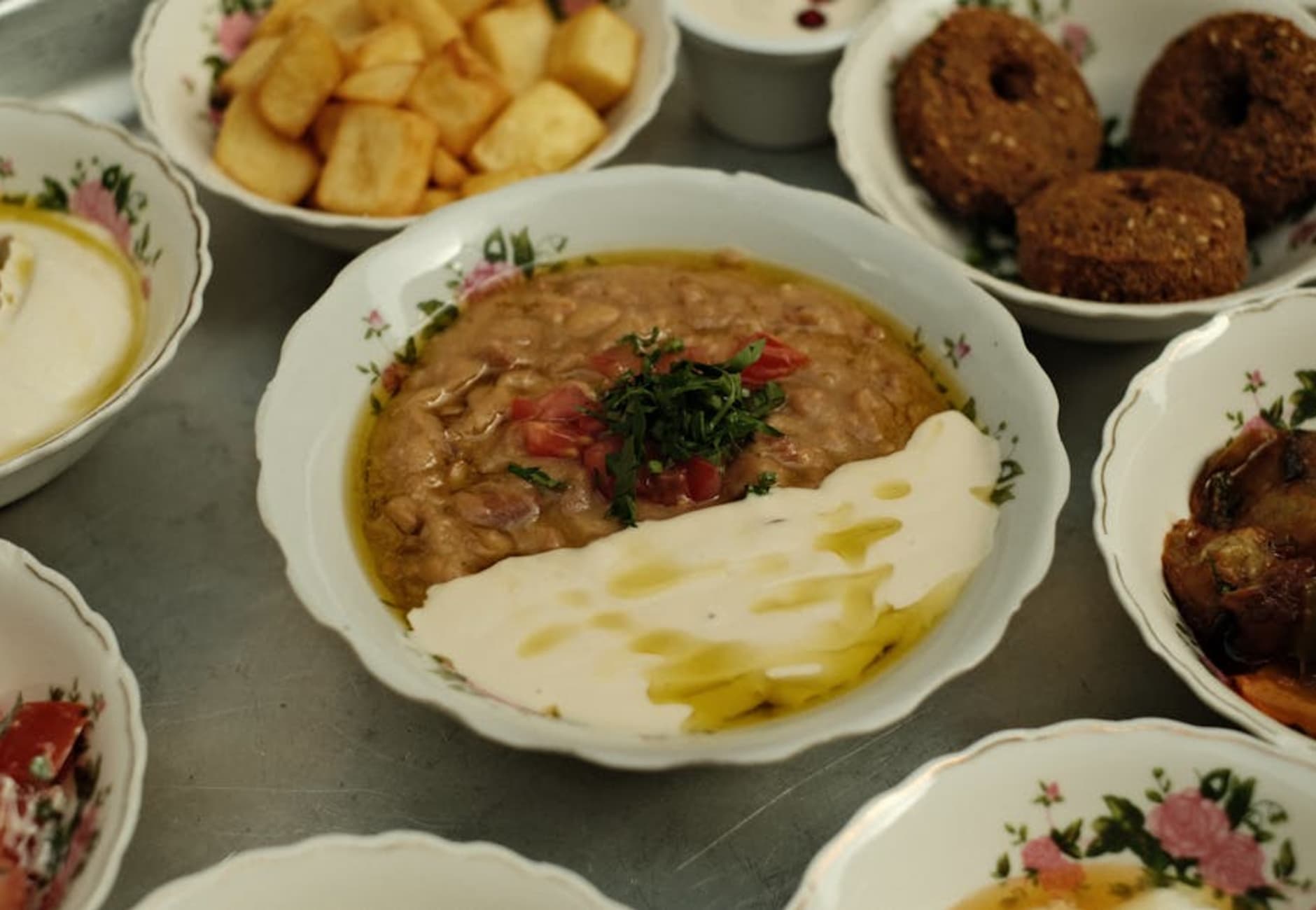
Falafel wraps — Crispy chickpea fritters in fresh bread with tahini, salad, and pickles. The best versions come from small Levantine shops in Bur Dubai, costing just AED 5-10.
Karak chai — Dubai’s unofficial national drink. Sweet, milky tea brewed with cardamom and condensed milk, served in small cups from cafeterias throughout the city. At AED 1-2 per cup, it’s the cheapest luxury in Dubai.
Regag bread — Paper-thin crispy bread cooked on a large dome-shaped griddle, often topped with cheese, egg, or Nutella. A traditional Emirati snack that’s becoming increasingly popular at food festivals and heritage events.
Fine Dining Highlights
Dubai has earned its place on the global fine dining map with a remarkable concentration of acclaimed restaurants.
TRESIND Studio in DIFC offers a multi-course Indian molecular gastronomy experience that redefines what Indian cuisine can be — it’s consistently rated among the world’s best restaurants. Ossiano at Atlantis The Palm serves exquisite Mediterranean seafood in an underwater dining room surrounded by 65,000 marine animals. Nobu Dubai delivers its signature Japanese-Peruvian fusion in an elegant setting at Atlantis The Royal.
For something uniquely Dubai, At.mosphere in Burj Khalifa is the world’s highest restaurant, serving refined international cuisine with views that extend to the horizon.
Budget-Friendly Eating
The best budget food in Dubai is found outside the tourist zones. Ravi Restaurant in Satwa has been serving exceptional Pakistani food since 1978 — a full meal costs AED 20-35 per person. Al Ustad Special Kebab in Bur Dubai serves legendary Iranian kebabs that have earned a loyal following over four decades.
For reliable, inexpensive meals: food courts in malls offer AED 25-40 meals with enormous variety. Cafeterias (small restaurants) in Deira and Karama serve filling plates of biryani, grills, and curries for AED 12-25. Supermarkets like Carrefour and Lulu have ready-to-eat sections with fresh food at local prices.
Brunch Culture
Friday brunch is a beloved Dubai institution — a weekly social event as much as a meal. Hotels compete to offer the most extravagant buffet spreads, often including free-flowing beverages, live cooking stations, and entertainment. Prices range from AED 200-600 per person depending on the venue and package. Standout brunches include Bubbalicious at The Westin, Saffron at Atlantis, and La Petite Maison in DIFC.
Vegetarian & Vegan in Dubai
Dubai is exceptionally vegetarian-friendly thanks to its large South Asian population. Indian vegetarian restaurants abound — Govinda’s and Saravana Bhavan offer extensive pure-vegetarian menus. Arabic mezze (hummus, falafel, fattoush, tabbouleh, mutabbal) is inherently vegetarian and available everywhere. Most high-end restaurants now offer dedicated vegetarian and vegan menus, and the specialty plant-based scene continues growing with spots like SEVA and Wild & The Moon.
Essential Food Tips
Restaurants add a standard 5% VAT and often a 7% municipality fee and 10% service charge, which can add nearly 22% to your bill. Tipping beyond the service charge is appreciated but optional (AED 10-20 or round up). Water is always served and usually charged — expect AED 10-25 for bottled water at restaurants. For the freshest seafood, visit the Dubai Fish Market in Deira where you can buy fish and have it cooked to order at adjacent restaurants.